
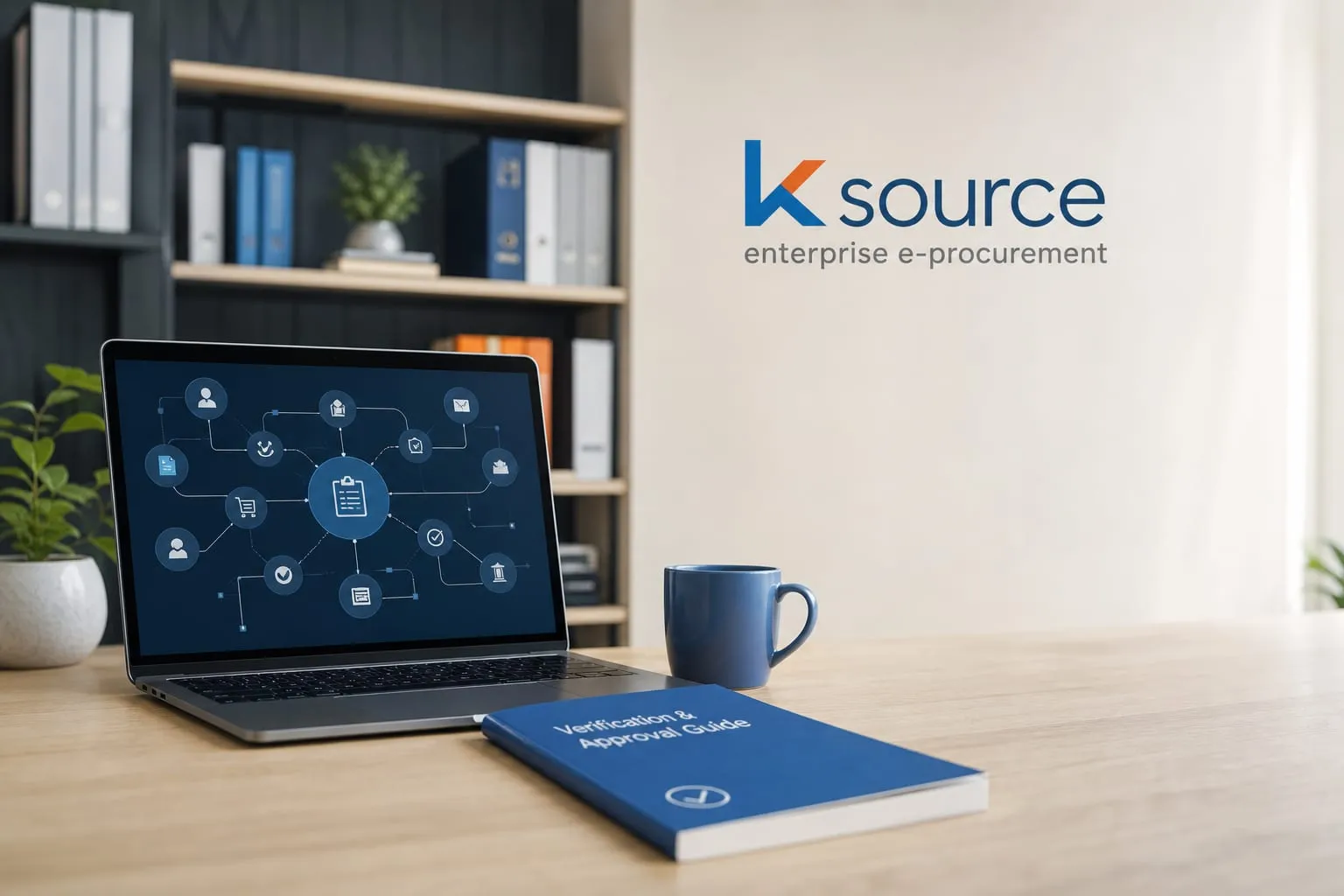
What an E Procurement Platform Means in Practice
An e procurement platform is not just an online form for purchase requests.
That distinction matters in Pakistan because many medium and large organisations still run procurement across email threads, spreadsheets, WhatsApp follow-ups, paper quotations, and separate finance approvals. The work gets done, but the record is scattered. When the CFO asks why a vendor was selected, or a department disputes the specifications, procurement has to reconstruct the story from fragments.
A practical e procurement platform should help answer four questions clearly: who requested the purchase, which suppliers were invited, what each supplier submitted, and why the final decision was made. For a Procurement Director, that is more useful than a broad claim about “digital transformation”. It is the difference between having a system of record and having another inbox.
Supplier Onboarding in Enterprise Procurement: A Practical Guide
Supplier onboarding is where an e procurement platform either becomes dependable or becomes a directory full of weak data. If suppliers enter the system without proper identity checks, category mapping, document review, and approval status, the RFQ stage inherits those problems.
For enterprise procurement teams, onboarding should not be treated as a one-time data collection exercise. It should create a usable supplier profile that supports sourcing decisions later. A supplier profile may include business identity, tax registration details where applicable, product or service categories, geographic coverage, contact persons, payment information, compliance documents, and internal approval status.
The practical question is not “How many vendors are registered?” It is “Which vendors are verified enough to be invited to this RFQ?” A large supplier list looks impressive until a buyer needs five qualified vendors for a time-sensitive industrial requirement and discovers that half the records are incomplete, outdated, or not approved for that category.
KSOURCE has a dedicated guide on the Supplier Onboarding Process that goes deeper into verification and approval. The key point for platform selection is simple: onboarding should feed the procurement workflow, not sit beside it as an isolated vendor database.
What Is Supplier Onboarding?
Supplier onboarding is the process of bringing a vendor into an organisation’s procurement environment in a structured and approved way. It is broader than supplier registration. Registration is usually the act of submitting basic information. Onboarding includes review, verification, classification, internal approval, and readiness to participate in sourcing events.
For example, a packaging supplier may register with a legal name, address, and contact number. Onboarding should go further: confirm the business identity, check relevant tax details, map the supplier to packaging categories, collect supporting documents, identify whether the supplier can handle required order volumes, and mark the supplier as approved, pending, rejected, or conditionally approved.
This matters because enterprise procurement is rarely a simple “lowest price wins” exercise. A supplier may offer an attractive rate but fail on delivery capacity, documentation, location, after-sales support, or category fit. A good platform should make those checks visible before the RFQ reaches the evaluation stage.
For suppliers, onboarding also reduces ambiguity. Instead of receiving ad hoc requests from different departments, vendors understand what information is required, where to submit it, and what approval status means. That makes the process more predictable for both sides.
Why Supplier Verification Matters Before Procurement Begins
Supplier verification protects the buying process before money, time, and internal credibility are committed. If verification happens only after bids are received, procurement may waste effort evaluating vendors who should never have been invited.
Consider a common enterprise situation: a plant team needs urgent maintenance equipment, finance wants a clean approval trail, and procurement must invite competitive quotations. If supplier documents are incomplete or the vendor’s capability is unclear, the RFQ may move quickly on the surface but slow down during evaluation. The team then has to ask for missing records, clarify ownership details, or confirm whether the supplier can actually deliver to the required site.
Verification reduces this risk by checking basic facts before sourcing begins. It does not eliminate commercial judgement, and it cannot prove every future delivery outcome, but it gives procurement a cleaner starting point.
This is also where bidding design matters. In some categories, open bidding may be suitable because transparency and supplier visibility help the process. In others, sealed bidding may protect fairness by keeping submissions confidential until the correct opening stage. KSOURCE explains the difference in its Sealed Bidding vs Open Bidding guide.
Step 1: Establish the Supplier’s Business Identity
The first practical step is to confirm that the supplier exists as the business it claims to be. This sounds basic, but weak identity records create problems later in contracting, payment, audit review, and dispute handling.
For Pakistan-based procurement teams, business identity checks often include the supplier’s legal business name, trading name if different, registered address, relevant tax identifiers where applicable, authorised contact person, bank account title, and category of goods or services supplied. The exact requirements vary by organisation and supplier type, so procurement should define them clearly rather than leaving each buyer to improvise.
An e procurement platform should make this structured. Required fields, document uploads, approval status, and change history help prevent the common problem of vendor records being edited informally without clear ownership. If a supplier changes bank details or contact authority, the system should support review rather than silent replacement.
The correction for many enterprises is to stop treating supplier identity as a spreadsheet column. It is a control point. When identity is weak, downstream procurement becomes harder to defend. When identity is clear, RFQs, purchase orders, payment approvals, and supplier performance reviews have a cleaner foundation.
Step 2: Assess Supplier Capability Before RFQs Go Out
Once identity is established, procurement should assess whether the supplier can actually serve the requirement. Capability is not a single checkbox. It depends on the category, volume, delivery location, technical complexity, service expectations, and urgency of the purchase.
For a standard office supply purchase, capability checks may be light. For manufacturing inputs, plant maintenance, technology services, logistics, or specialised equipment, the buyer may need more detail: product range, past supply categories, delivery coverage, certifications where relevant, stock availability, support arrangements, and ability to meet payment and documentation terms.
This is where RFQ automation becomes useful. A well-structured RFQ should ask suppliers for comparable information, not just a quoted price.
Capability also affects supplier shortlisting. Procurement teams should avoid inviting every registered supplier to every RFQ. Too many irrelevant invitations create supplier fatigue and make evaluation harder. A better approach is to invite suppliers whose verified profile, category mapping, and capability match the requirement.
For teams thinking beyond basic vendor lists, KSOURCE’s article on turning a B2B procurement marketplace into decisions is relevant because marketplace visibility only helps when buyer decisions remain structured.
Where Digital Procurement Platforms Can Help — and Where They Cannot
A platform can enforce steps, preserve records, standardise RFQs, support sealed bidding, route approvals, and make supplier information easier to review. It can reduce dependence on scattered email trails and informal follow-ups. It can also make procurement more transparent for finance and leadership because the decision record is easier to inspect.
But software cannot repair unclear procurement policy by itself. If the organisation has not defined approval thresholds, category ownership, supplier qualification rules, or who can override a recommendation, a platform will expose that confusion rather than remove it. The same applies to poor specifications. If the RFQ description is vague, suppliers will submit bids that are difficult to compare, even in a strong system.
The practical sequence is to clean the workflow enough before digitising it: define who requests, who approves, who evaluates, what supplier data is mandatory, when sealed bidding is required, and what evidence must be retained. Then use the platform to make those rules easier to follow.
KSOURCE has also written about situations where generic advice stops matching complex buying work in its article for enterprise buyers. That is the right lens here: choose digital procurement around the constraints of real purchasing, not around a generic software checklist.
What is the difference between supplier onboarding and supplier registration?
Supplier registration is the initial submission of vendor information. Supplier onboarding is the fuller process of checking, classifying, approving, and preparing that supplier to participate in procurement workflows such as RFQs and sourcing events.
What is PR in procurement?
PR usually means purchase requisition: an internal request raised by a department before a purchase order is issued. It records what is needed, why it is needed, and who must approve it before procurement proceeds.
Should every RFQ use sealed bidding?
No. Sealed bidding is useful when confidentiality, fairness, and controlled opening of bids matter. Some low-risk or highly collaborative purchases may work better with a different sourcing method, depending on policy and category.
How should a Procurement Director get started?
Start by mapping the current process from requisition to supplier selection. Identify where information gets lost, where approvals slow down, and where supplier verification is weak.
Your Next Move with KSOURCE
The useful way to evaluate an e procurement platform is to follow one real buying journey: supplier onboarding, RFQ creation, bid control, evaluation, approval, and decision record. If the platform improves that journey, it is relevant. If it only digitises fragments, the same procurement problems will return in a new format.
For enterprise buyers in Pakistan, KSOURCE is built around e-procurement, e-sourcing, RFQ management, supplier workflows, sealed bidding, and vendor participation. Review your highest-friction procurement category first, then see whether the workflow can be made clearer, more auditable, and easier for qualified suppliers to participate in.
Visit KSOURCE to explore how the platform supports enterprise procurement workflows.
